The System Says Yes: Cosmere RPG at the Table
Content note: This post discusses specific moments from Pedal to the Metals, a pre-release adventure for Cosmere RPG. If you plan to play it yourself and want to come to the table fresh, you may want to skip ahead.
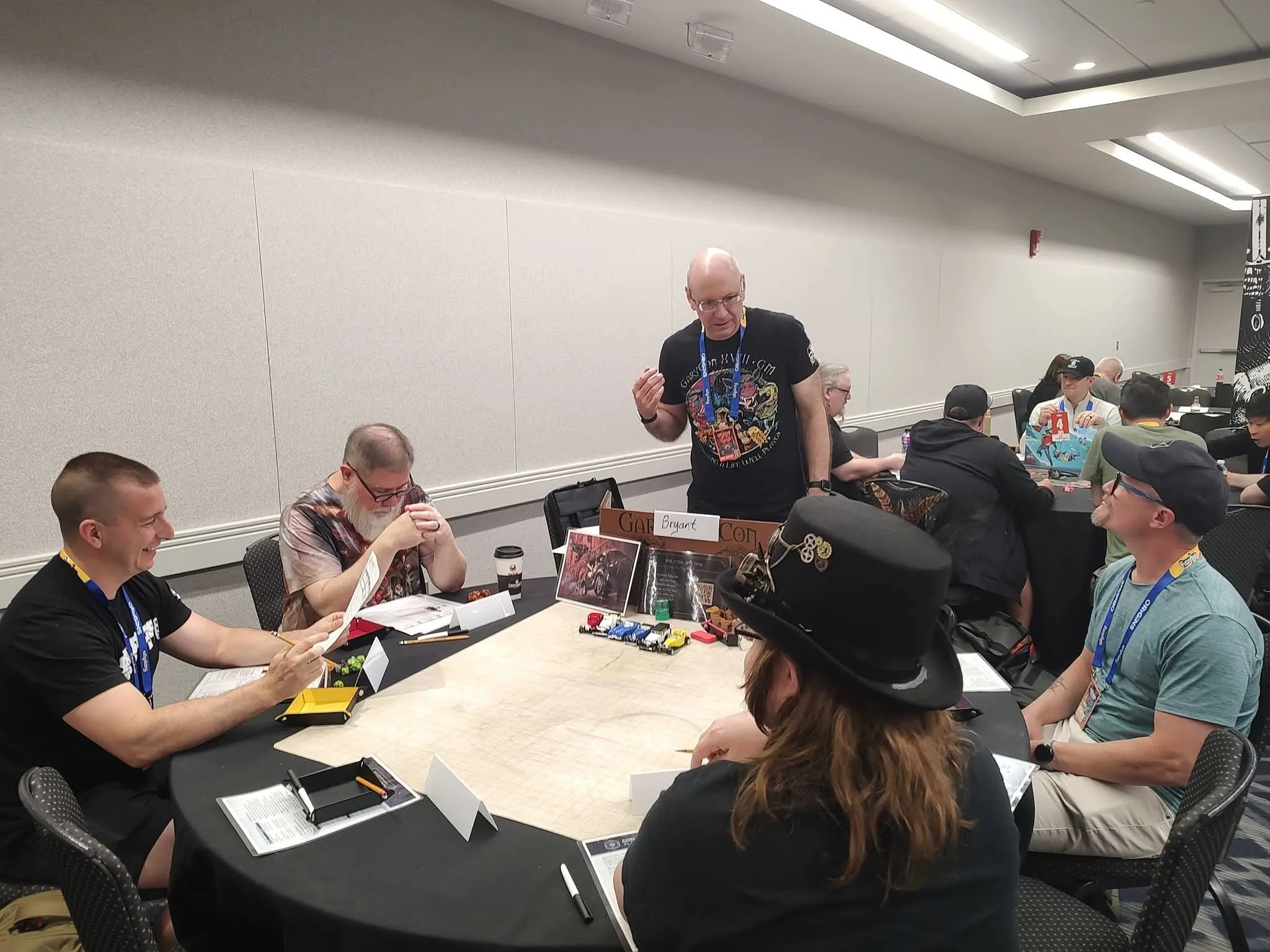
I ran Cosmere RPG: Mistborn Legacy at Origins this year, four slots across Wednesday through Saturday, under the Lurking Fears banner. This was my second Origins, and it remains my favorite convention. A little less than twenty thousand people, big enough to breathe, small enough that the vendor hall does not feel like a cattle drive. The hotels are attached to the space. You could spend five days playing demo games without ever stepping outside.
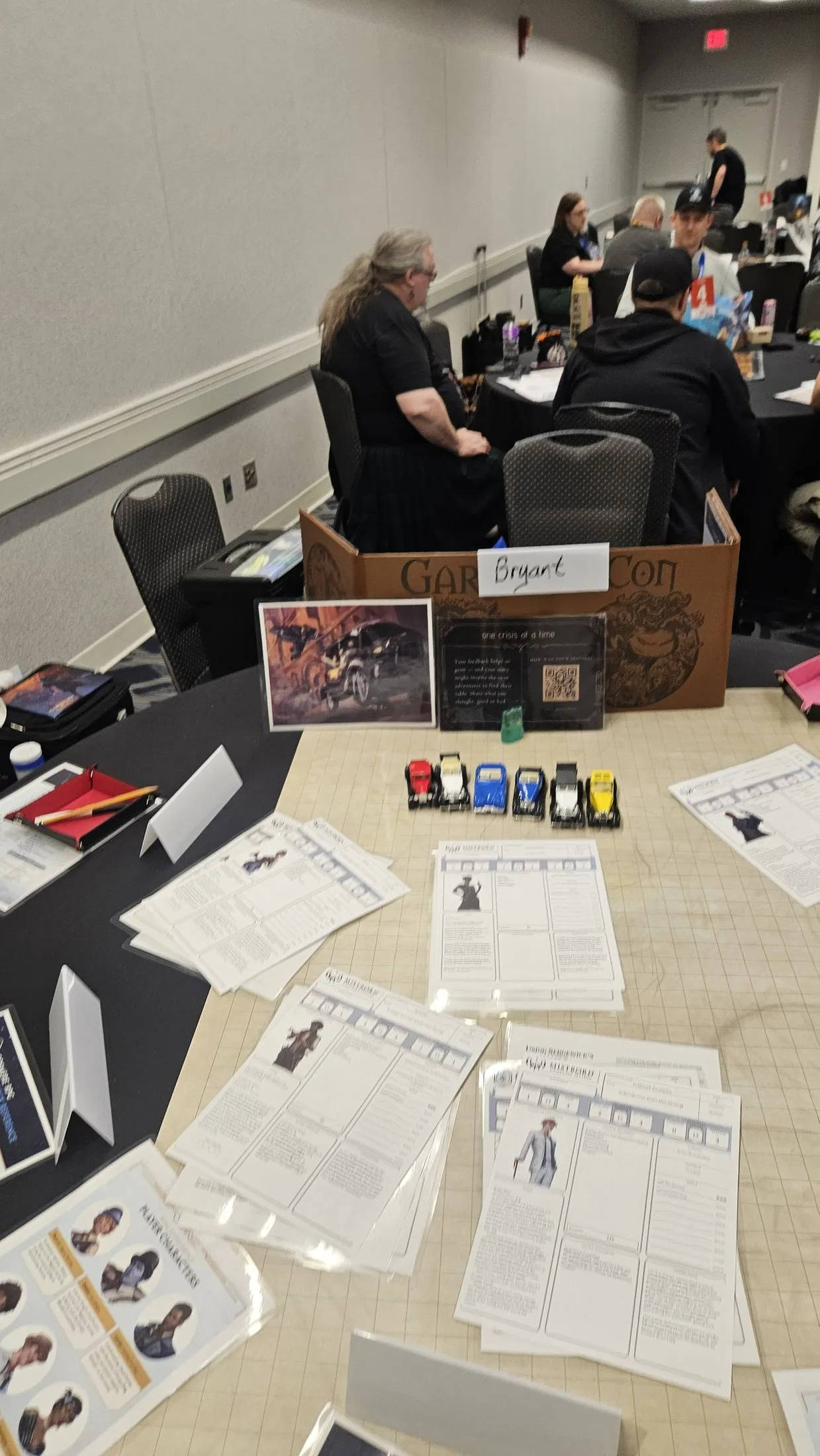
Here is the thing about running pre-release material: most of the players who showed up had read at least one Mistborn book. Several had read all of them. System-wise, the table was mixed. Some knew Cosmere RPG already, and others were discovering it for the first time. But the fiction was home turf for almost everyone. They came in invested in Scadrial, in Allomancy, in the world Brandon Sanderson built. The system was the new part. The world was already theirs.
That distinction matters, because it changes how the table plays. When players arrive already caring about the setting, I was not teaching them the stakes. I was simply handing them the dice to live in them.
The Double-Pull
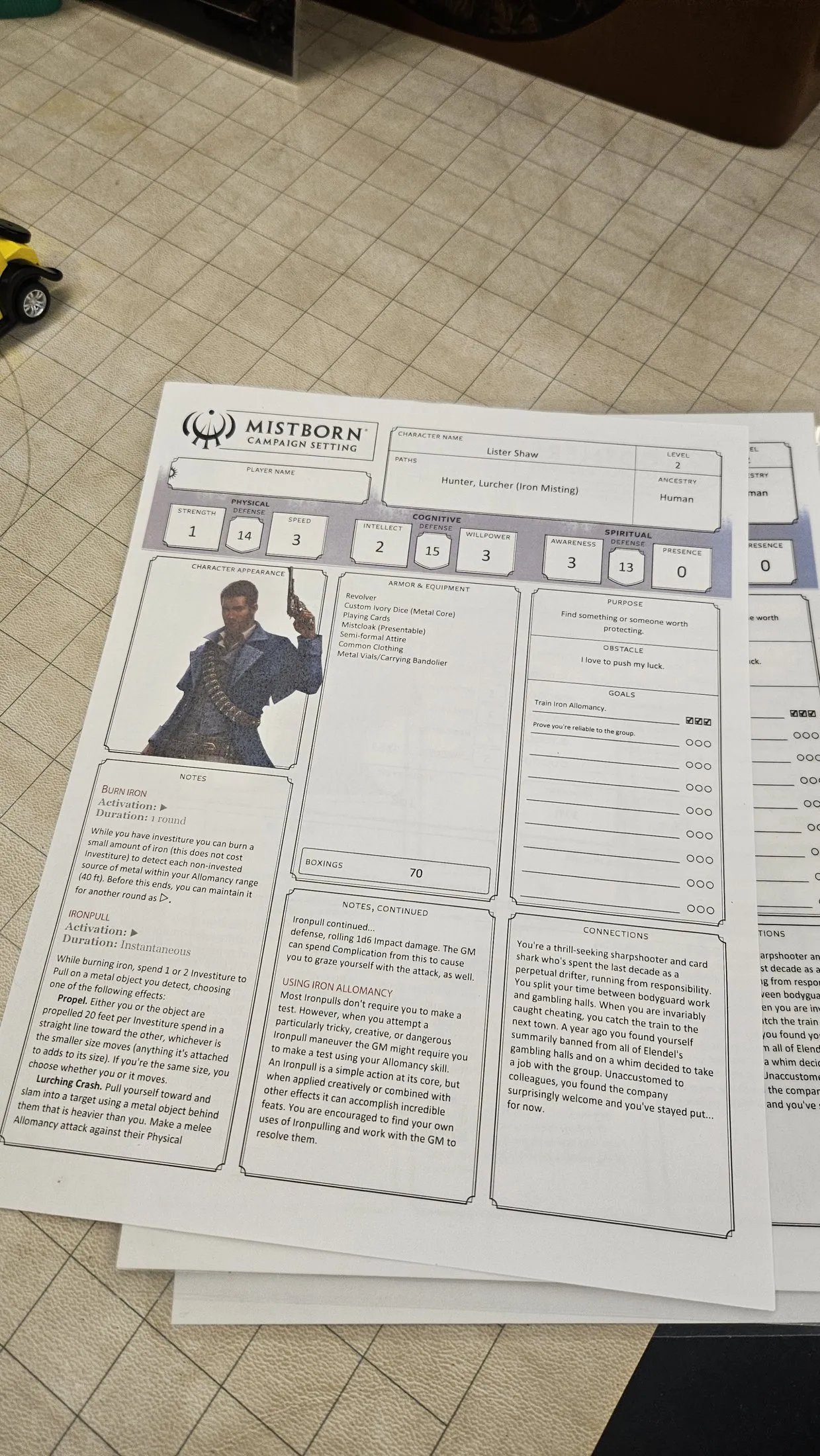
In the middle of the adventure, there is a gate the party is not supposed to be able to open. One of my players, someone who had clearly internalized how Allomancy works, came up with a solution: a double pull, using himself as a leverage point to open it. Not brute force. Not “I try harder.” This was understanding the system inside the fiction.
I made it hard. DC eighteen. Genuinely risky. But I let it live, because that is how I run. If you want to try something, tell me what you are doing, and we will see where it goes.
What happened next is why I am a GM.
The table saw that the gate could be opened. They did not just watch one player roll. They rallied. One character spent a focus to aid the roll. Another used their talent to add a 1d4. A third let the lead character reroll the plot die. The team came together, not gaming the system, but collaborating on the story. And in the end, he succeeded. He opened a gate the adventure did not write him opening.
That table did something no other table running Pedal to the Metals had done yet at that point.
The Mugging
I had another table with a different kind of creativity. The adventure wants them to steal a medallion from an NPC during a gala heist. This table looked at that and said no. What they decided to do was find him before the big race, mug him, steal the medallion, make a copy, and return the fake to the police for a reward.
It was incredible thinking, completely out of the box. And watching them figure out how to do it, rolling the dice, having bad things happen, then another character making a last-ditch save, that is the game working exactly as designed. They owned the narrative. They found an angle that was not written or planned for, and instead of breaking the adventure, it enriched it.
The Fortune-Tapper
On one of my later tables, things went bad fast. Consequences piling up. Double negatives. I honestly thought I was going to kill that table.
Then one player, the one playing a character who can tap fortune, rolled twice in a row and got double opportunities both times. An opportunity on the d20 and an opportunity on the plot die, twice over. This character has a weak gun, no special combat powers, nothing mechanically flashy. But tapping fortune means something has to happen, good or bad. And when it is good, when the narrative opportunities align, a peashooter becomes the moment that saves everyone.
No one died. They escaped without a scratch. Not because the character was powerful, but because the system rewards players who accept the risk and play the chaos.
Why I Run This Way
Before the first session, I told every table the same thing. Do not ask me if you can do something. Tell me what you want to do, and then we will figure out if it is possible. And if it cannot happen, do not be afraid to go for the incredible anyway.
I run this way because I love it when characters do things I do not expect. I love it when the story goes somewhere I did not plan. I am there with them, and we are creating it together as we go.
Moments like a double pull opening a sealed gate. A table deciding to mug an NPC before the heist even starts. A weak character with a peashooter tapping fortune and saving the day.
That is why I am a GM.
And Cosmere RPG, a system that says yes, that gives players mechanical permission to try the impossible, that rewards narrative risk as much as mechanical success, is exactly the kind of game that makes those moments possible.
join the table
reviews, notes, and musings from the table to your inbox